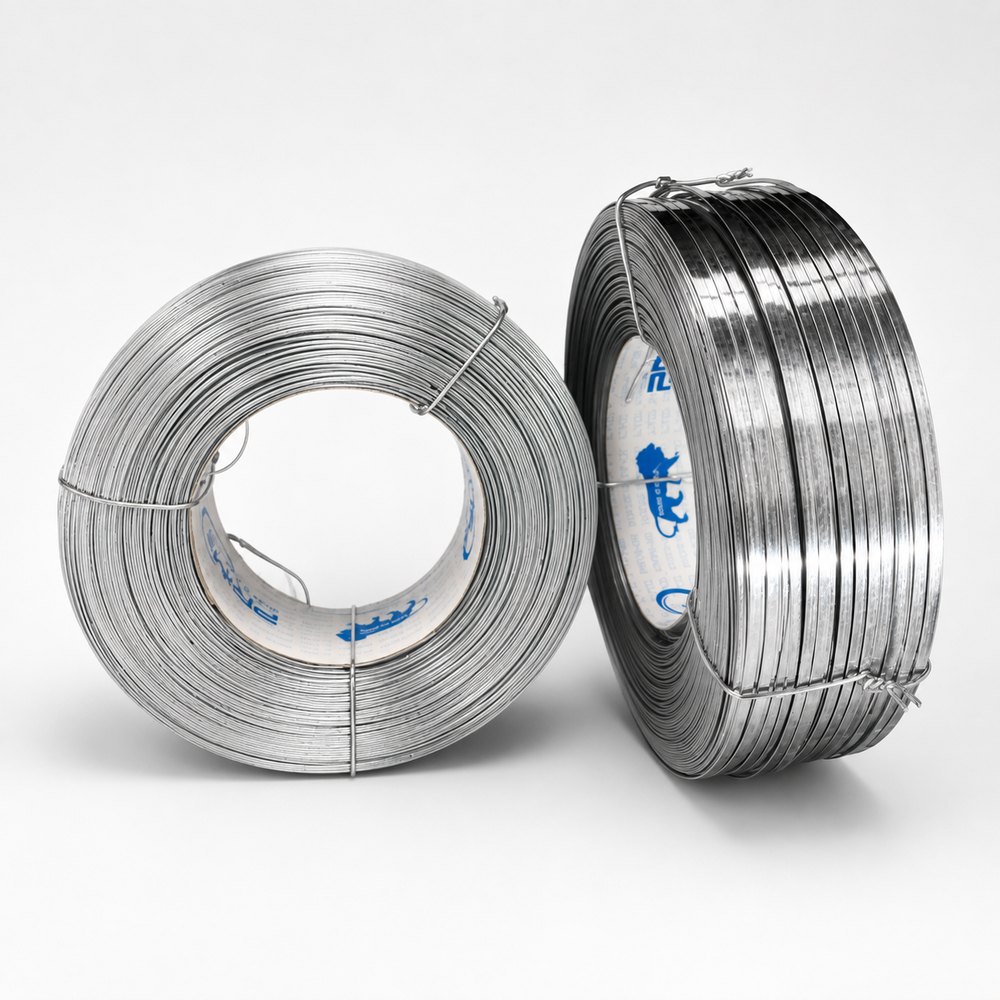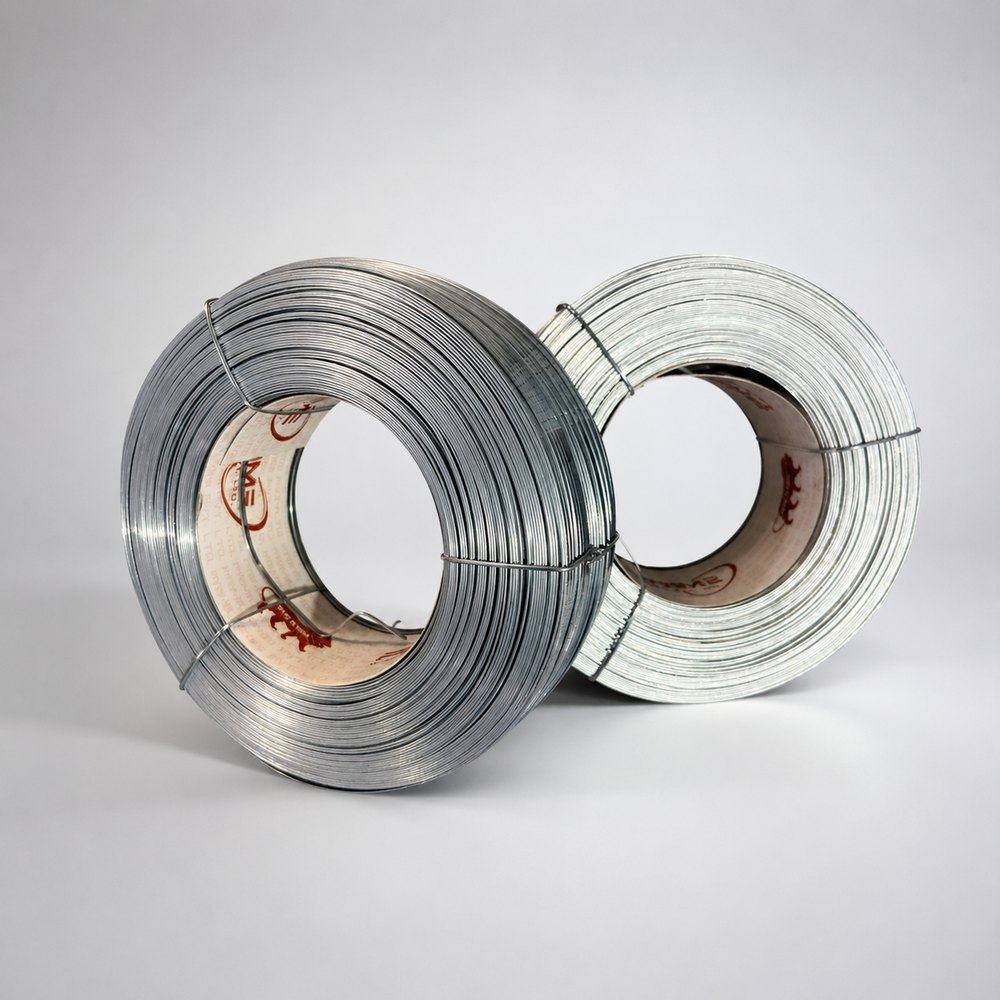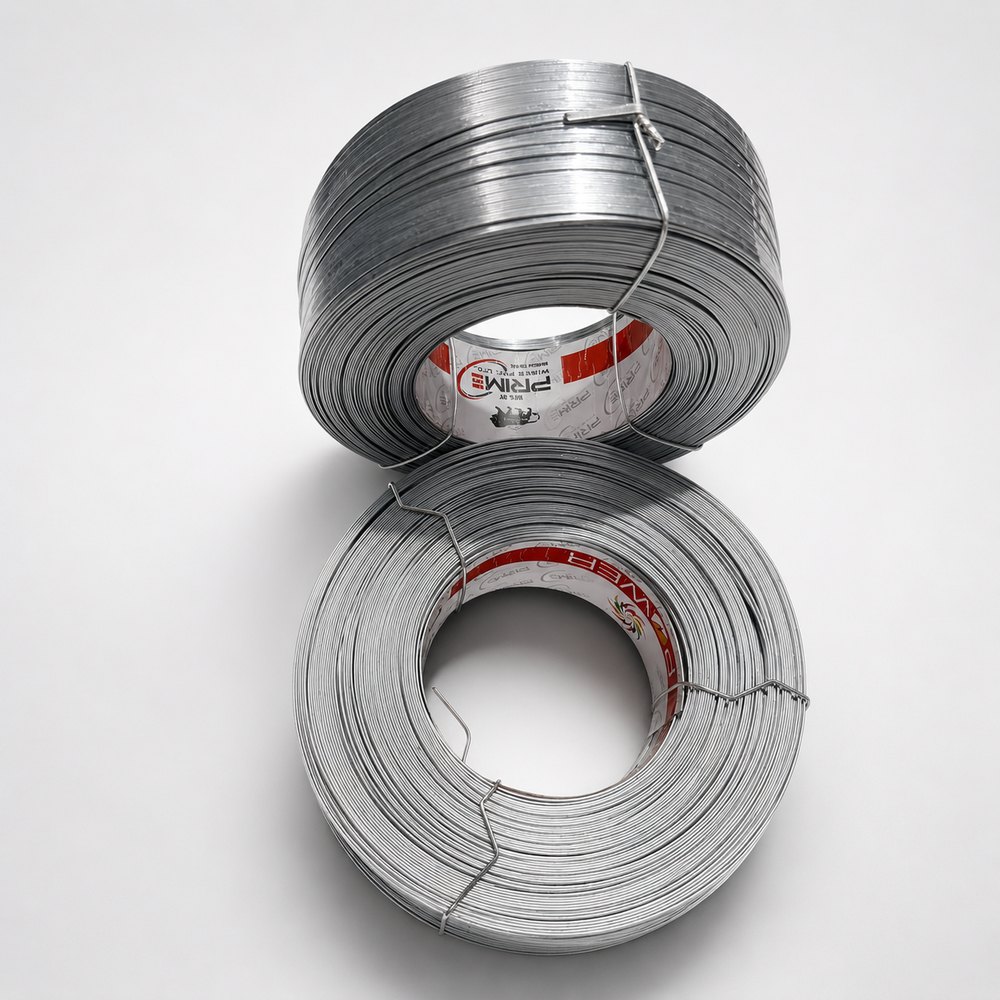
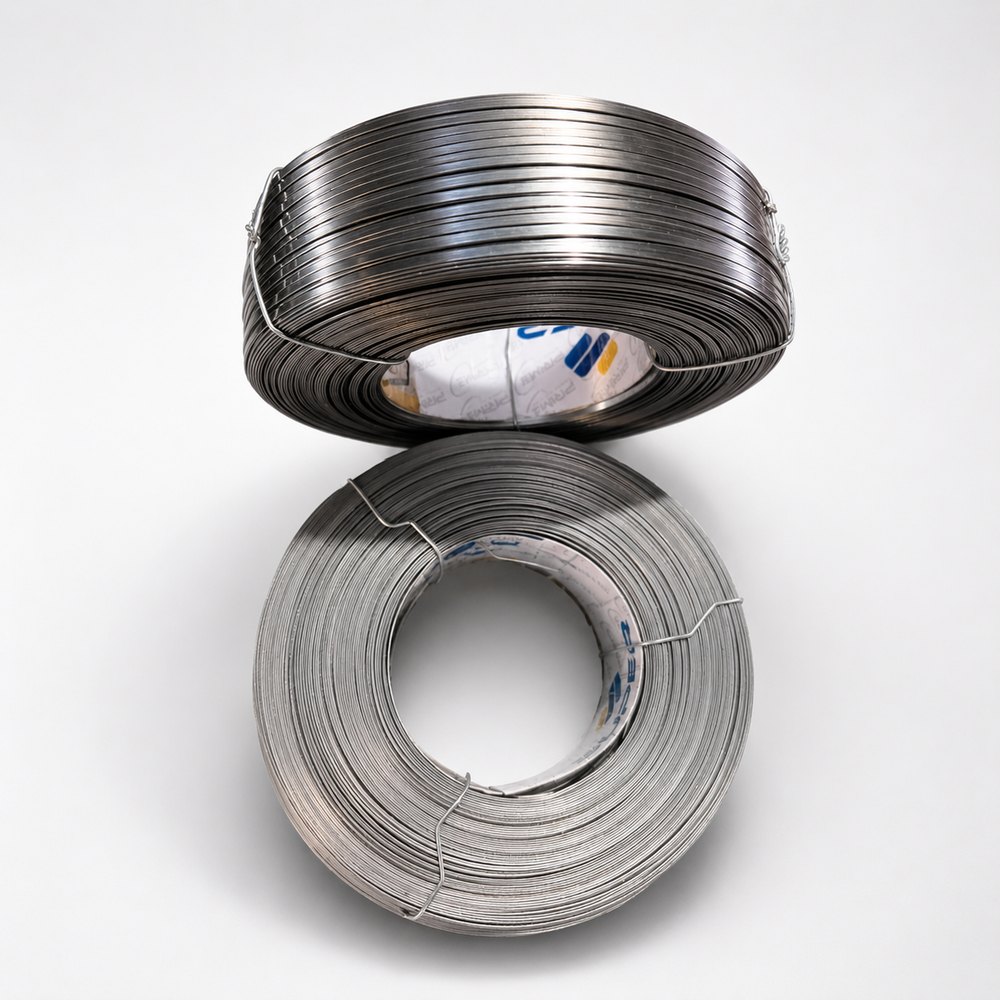
Stainless steel stitching wire
Solid stainless steel stitching wire with no coating to wear off. It comes in two types: magnetic (ferritic), which metal detectors can find, and nonmagnetic (austenitic), used where magnetism is a problem.
| Property | Value |
|---|---|
| Base metal | Stainless steel, solid, no coating |
| Grades offered | Ferritic (magnetic, 430 type) and austenitic (nonmagnetic, 304 or 302 type) |
| Magnetic response | Ferritic: magnetic in all conditions. Austenitic: nonmagnetic annealed, slight response after cold work |
| Tensile strength | On request |
| Elongation | On request |
| Flat sections | 22 to 26 gauge |
| Thickness tolerance | ± 0.02 mm |
| Width tolerance | ± 0.05 mm |
| Finish | Bright / matt |
| Corrosion life | Immune to red rust; austenitic superior in chloride and sustained humidity |
| Relative cost / kg | On request |
| Spools | On request |
| Packing | Shrink wrapped and palletised |
Where a row lists options, please tell us which one you need when you enquire.
Where it is used
Both types resist rust equally well. Choose between them based on whether your packing line uses metal detection.
Food and drink packaging, pharma cartons, premium printed products, and any line where rust is not acceptable and stitches must be covered by foreign body checks.
Which type do you need?
Magnetic: ferritic, 430 type
Contains iron and chromium, no nickel. It is magnetic, so a broken stitch or a piece of wire will show up on the metal detectors used at the end of most food and pharma packing lines. If your customer relies on metal detection, choose this type.
Nonmagnetic: austenitic, 304 or 302 type
Contains iron, chromium and nickel. It is nonmagnetic when annealed, though flattening and clinching can make it slightly magnetic. Choose it where magnetism is a problem, such as magnetic media, electronics, instruments and lines with magnetic separators. It also resists rust better than the 430 type in salty or very humid conditions.
Nonmagnetic stainless steel is much harder for a standard metal detector to find than magnetic stainless or plain steel. Some plants have chosen it for food cartons and later found at audit that their metal detectors no longer pick up the stitches.
Please check the metal detection setup at the packing plant before you order nonmagnetic wire. We are happy to talk it through with you first.