G.I. vs brass stitching wire
Brass costs about seven times more than galvanised wire per kilogram. But what really matters is the cost per carton, and that difference is much smaller than most people think.
Galvanised stitching wire is mild steel with a zinc coating, so it can rust once the coating is worn or scratched. Brass stitching wire is solid copper and zinc alloy with no steel, so it cannot rust. Brass costs about seven times more per kilogram, but on a typical eight stitch carton at 23 gauge the difference is only about ₹1.71 per carton. If rust would cause more than about one carton in 25 to be rejected or reworked, brass is the cheaper wire.
How the two wires are made
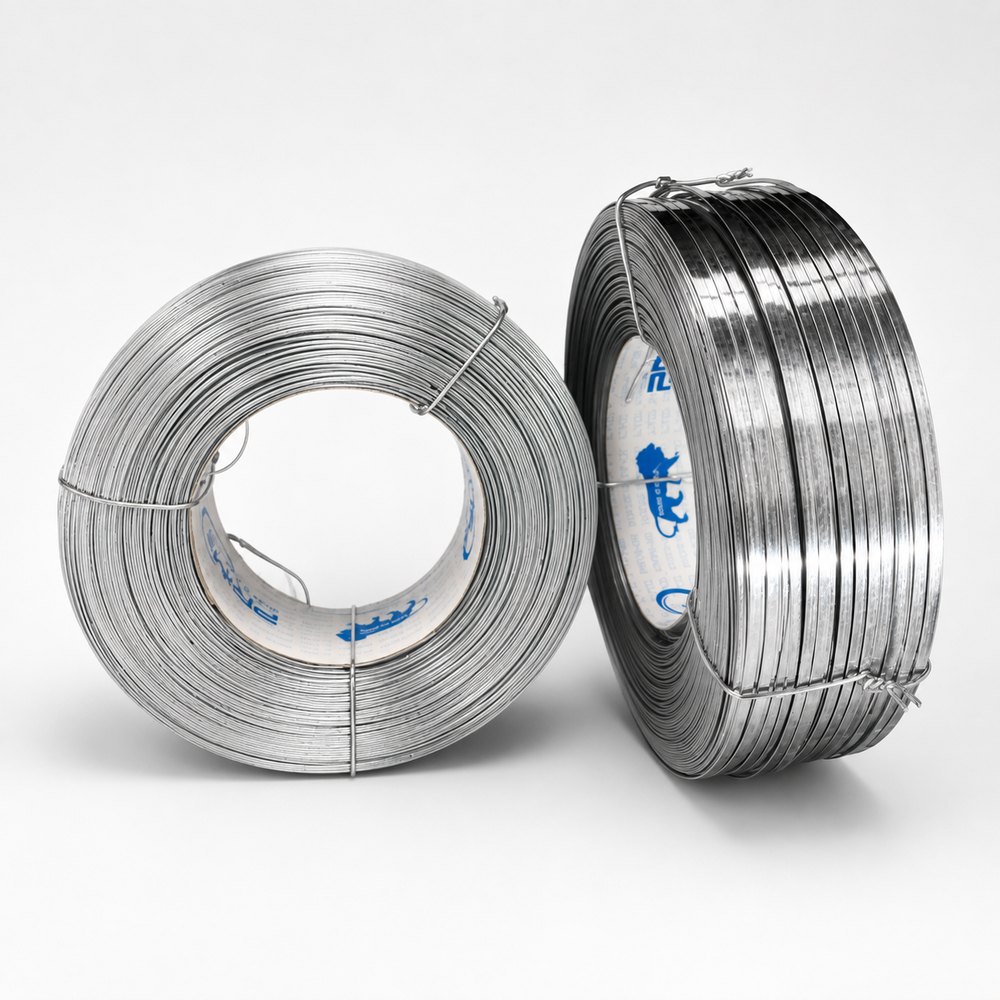
Galvanised stitching wire starts as low carbon mild steel rod. It is drawn, annealed and then electroplated with a thin layer of zinc, usually 8 to 12 grams per square metre. That is thinner than a sheet of paper. The wire is then rolled flat and wound onto spools.
So the rust protection is only a thin layer over a steel core. The zinc does protect the steel for a while. But once the coating is cut, bent or scratched, the steel underneath is exposed and will rust when it meets moisture. And every stitch is cut at both ends and bent in three places.
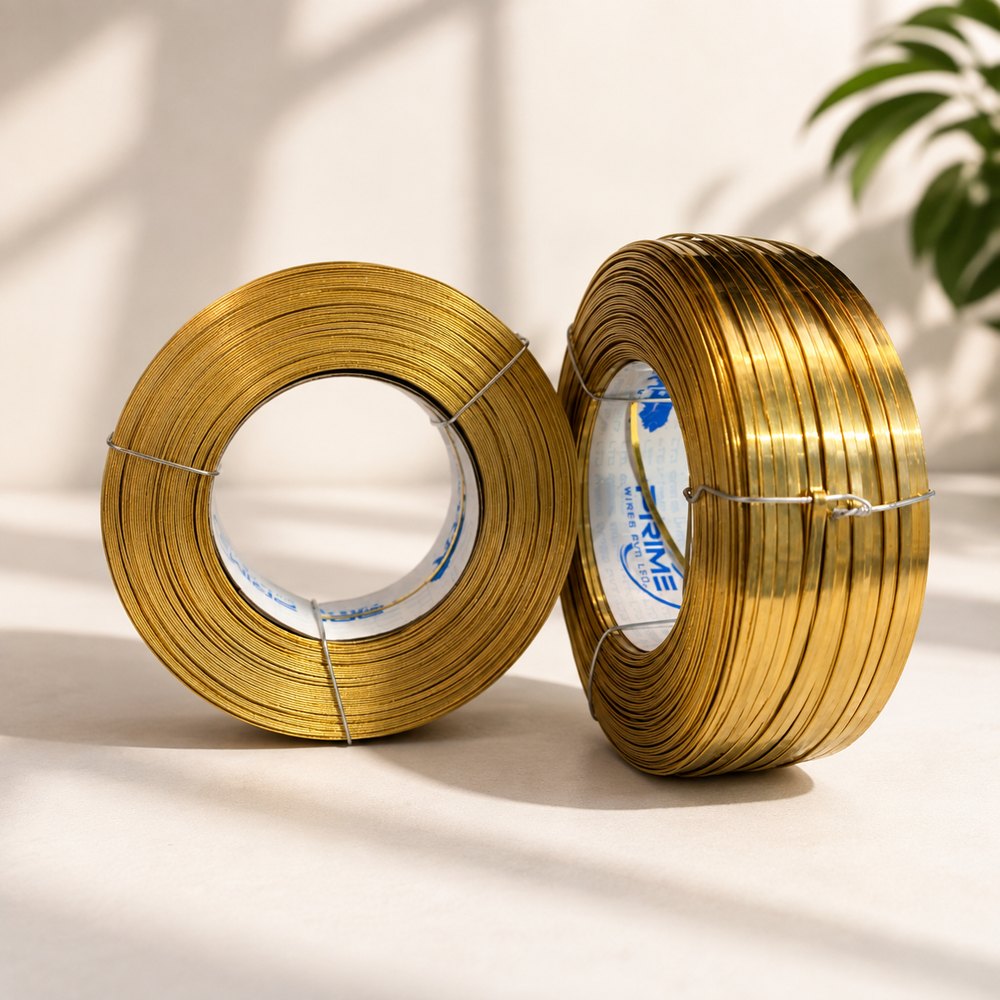
Brass stitching wire is solid copper and zinc alloy all the way through. Cutting or bending it only exposes more brass, so there is nothing underneath to rust. It is not a better coating, it simply needs no coating.
Side by side
| Property | Galvanised (G.I.) | Pure brass |
|---|---|---|
| Base metal | Low carbon mild steel | Copper and zinc alloy, solid |
| Protection | Electroplated zinc coating | None needed |
| Coating weight | 8 to 12 g/m² | Not applicable |
| Tensile strength | 700 to 900 N/mm² | 620 to 780 N/mm² |
| Density | 7.85 g/cm³ | 8.50 g/cm³ |
| Corrosion behaviour | Rusts once coating is breached | Cannot rust; tarnishes cosmetically |
| Finish | Bright silver | Bright yellow |
| Indicative price | ₹92 / kg | ₹640 / kg |
| Wire per kg at 23 gauge | 126 m | 117 m |
| Cost per stitch (45 mm) | ≈ 3.3 paise | ≈ 24.9 paise |
Prices are approximate and change with metal prices. Use the cost per pin calculator with your own prices.
The cost, worked out
Take an ordinary double wall carton worth ₹42, closed with eight stitches of 23 gauge flat wire (0.63 by 1.60 mm). Each stitch uses about 45 mm of wire.
The wire area is 0.63 × 1.60 = 1.008 mm², so one stitch uses 45.36 mm³ of metal. In galvanised wire (7.85 g/cm³) that weighs 0.356 g. In brass (8.50 g/cm³) it weighs 0.386 g, because brass is slightly heavier.
At ₹92/kg, a galvanised stitch costs 3.28 paise. At ₹640/kg, a brass stitch costs 24.68 paise. For eight stitches that is ₹0.26 per carton in galvanised and ₹1.97 in brass, a difference of ₹1.71. Our cost per pin calculator gives the same result for these numbers.
On a ₹42 carton, the wire goes from 0.6% of the carton value to 4.7%. The real question is what happens to the carton after it leaves your factory.
When brass pays for itself
Switching to brass costs ₹1.71 per carton. A rejected carton costs you the carton itself (₹42), plus any damaged goods inside, plus the freight, plus your reputation with the customer.
Counting only the carton, brass pays for itself if it saves one carton in 25 from rejection. A 4% rejection rate due to rust is quite common for galvanised stitched cartons stored through a monsoon or shipped for weeks in a container.
If you also count the goods and the freight, brass pays for itself even sooner. This is why many large packers simply use brass or copper wire for export. It removes the risk of rust claims.
Which one should you use?
Galvanised wire is the right choice for most cartons, and it is still the wire we sell most. The point is to compare the cost per carton, not per kilogram.
If your needs are in between, for example humid storage but no export, the best choice is usually rust resistant or Power G.I. stitching wire. It has the same steel core with two to four times more zinc, at a much lower cost than brass.
Common questions
Is brass stitching wire worth the extra cost?
It depends mainly on the value of the carton and where it is going. On a 42 rupee carton with eight stitches at 23 gauge, galvanised wire costs roughly 26 paise per carton and brass roughly 1 rupee 97 paise. The difference is about 1 rupee 71 paise, or a little over four percent of the carton value. If rust would cause even one carton in 25 to be rejected, brass pays for itself. On a low value carton opened next week, it does not.
Does brass stitching wire rust?
No. Brass stitching wire is made from solid copper and zinc alloy and contains no steel. There is nothing to rust and no coating to wear off. Over a long time it may tarnish on the surface, but it does not form the red rust that stains and weakens a carton.
Is brass stitching wire stronger than galvanised?
No, and it does not need to be. Galvanised stitching wire runs 700 to 900 N/mm² tensile; brass runs 620 to 780. Stitching does not put the wire anywhere near its breaking strength. What matters in a stitch is an even wire size and a clean clinch, and brass does both well.
Which is better for export cartons, galvanised or brass?
Brass, in almost every case. A shipping container heats and cools during a sea voyage, and moisture settles on the metal inside. Galvanised stitches are often the first thing to rust, and the complaint can arrive three to four months after shipping.